Durin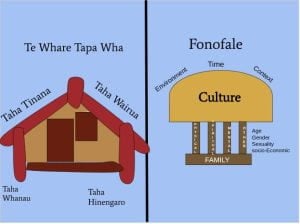 g health class we have been learning about the Te Whare Tapa Wha and the Fonofale models. Te Whare Tapa Wha was developed by leading Māori health advocate Sir Mason Durie in 1984. The model describes health and wellbeing as a wharenui/meeting house with four pou. The four pou in this model are Taha Wairua which is your spiritual well-being, Taha Tinana is your physical well-being, Taha Hinengaro is your mental and emotional well-being and then there is Taha whanau which is social well-being. But the last one is the base and that is the whenua. All these four pou are important to us Maori because when one or more of these is out of balance our well-being is impacted.
The four key concepts of Te Whare Tapa Wha:
- Taha Tinana(Physical well-being):
This well-being focuses on the body’s physical health, including its capacity development, moment and growth. For Maori, the physical dimension is not isolated but interconnected with other aspects of well-being, such as mental, social, emotional and spiritual.
- Taha Wairua(Spiritual well-being):
Taha Wairua explores the relationship with the environment. Taha Wairua is about finding things that give your life meaning and purpose, whether through faith, connection to nature, or personal values
- Taha Hinengaro(Mental & Emotional well-being):
Taha Hinengaro encompasses the mind, heart, thoughts, feelings, and how you communicate and think. It’s about feeling good, coping with challenges, and thriving in life
- Taha Whanau(Social well-being):
Taha Whanau is all about strong connections and socializing with others. It shows the importance of strong connections with others, a sense of belonging, and identity.
The second model we are learning about is the Fonofale model, this model is about all island ethnicity. This has been named the Fonofale from the culture of Samoan naming it “The House Of Support”. In this model there are also four pou that are similar to the T Whare Tapa Wha which are physical, mental, spiritual and other. Other stands for your age, gender, sexuality and socio-economic, the base for the fale “house” is family.
The four key concepts of the FonoFale:
Physical is all about moving your body and also looking after it, being careful of how you treat it and how you are nourishing it.
Spiritual is about finding things that give your life meaning and purpose.
Mental is all about recognizing the importance of your state of mind, abilities, emotions and behaviours
Other include factors like gender, sexuality, age and socio-economic status. It emphasizes the interconnectedness of various aspects in life.
Thank you for reading my comparison of two of the health models, I hope these models can benefit you in the future when looking at health issues.
